
Electric vehicle (EV) manufacturers breathed a sigh of relief after the GST Council on Wednesday night retained the concessional 5 per cent rate on EVs, though they now face competition from small petrol and diesel cars, which will attract a lower 18 per cent levy.

French automotive component maker Valeo on Wednesday said it will invest over Rs 2,150 crore in India and treble its annual sales in the country to around Rs 7,510 crore by 2028.

Investors and startup executives are calling for extending the period for an entity to be recognised as a startup from 10 to 15 years for deep-tech companies.
'The reported deal between the European Union and China should mitigate it (shortage) for the medium to long term. Let's wait and watch how this plays out.'
The move offers flexibility in compliance but also places penalties squarely on the designated manager of such a pool.

The Pune-based research institute will design and develop car batteries and offer the technology for mass production.

Maruti Suzuki, India's largest producer of small cars, stands to benefit the most.

Japanese auto major Honda considers India a key market for its future growth alongside the US and Japan, according to Honda Cars India President and CEO Takashi Nakajima. The Tokyo-headquartered automaker, which operates in India through a wholly owned subsidiary, plans to drive in more SUVs in the country, as the segment continues to see robust sales across varied price points.

Traversing from being just vehicle manufacturers to mobility solutions providers amid a raging debate over which eco-friendly technology must be incentivised, the Indian automobile industry is driving in the new year under the shadow of a slowdown in sales with the post-pandemic pent-up demand in distant memory. The shift in the auto industry -- where advanced technologies like autonomous driving, vehicle intelligence, connected features and electrification are quickly gaining traction -- will be reflected in the upcoming Bharat Mobility Global Expo in which India's flagship Auto Expo has been clubbed to be held from January 17-22, 2025 in Delhi-NCR.
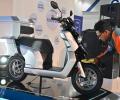
Seven electric two-wheeler companies have suffered a cumulative loss of over Rs 9,000 crore on account of unpaid dues and loss of market after their subsidies were stopped last year, the Society of Manufacturers of Electric Vehicles (SMEV) said on Wednesday. These companies have also been directed by the govt to refund the subsidies availed by them. The audit by SMEV's chartered accountants indicates the total, cumulative damages to affected companies could account for over Rs 9,000 crore on a conservative basis, it noted.

'We are going to have hybrid cars, which, as far as I know, none of our competition is working on, and this includes ethanol.'

Scientists at the GraphIN 2026 conference highlighted the potential of ultra-sensitive graphene sensors for rapid disease detection and various other applications, including flexible heating pads for neonatal care and lightweight structures for unmanned aerial vehicles.
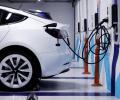
India's electric vehicle (EV) industry hit a new milestone in 2024, with sales surging 26.5 per cent year-on-year to 1.94 million units as of December 29, according to Vahan data from the Ministry of Road Transport and Highways (MoRTH).

For UK automakers, market access to India will be limited by quantity caps and phased tariff cuts, especially on petrol, diesel and electric vehicles.

Companies making electric two-wheelers, through their association Society of Manufacturers of Electric Vehicles (SMEV), have taken on the Department of Heavy Industries (DHI), saying they did not get subsidies for even half the mandated 1 million units they manufactured. Subsidies are given under Faster Adoption and Manufacturing of Hybrid and Electric Vehicles 2 (FAME II). In a petition to the parliamentary standing committee on industry energy and estimates, the SMEV said the department had done an "accounting error" by showing that it (the department) was close to achieving the mandated target by including sales of the EVs that were "not funded" under the scheme.

Maruti Suzuki India (MSIL) will hold discussions with the Centre and state governments on how the production of compressed biogas (CBG), which can be used in vehicles that run on compressed natural gas (CNG), can be expanded in the country, its majority shareholder Suzuki Motor Corporation (SMC) said. The demand for CNG vehicles has been rising significantly in the country. MSIL sold 145,000 CNG vehicles in the first quarter of 2024-25, marking a 28.3 per cent year-on-year (Y-o-Y) growth.

Led by Ola Electric, which registered an industry record of 53,186 vehicles in March, electric two-wheeler (e2W) penetration hit a record at 8.91 per cent - the highest ever for a month (based on Vahan data).

Prime Minister Narendra Modi on Tuesday announced the signing of the India-EU Free Trade Agreement (FTA), saying it accounts for 25 per cent of global GDP and one-third of global trade.

New electric and hybrid vehicles on display as manufacturers plug into environment-friendly segment.

Brokerages expect the company to continue outperforming in the auto segment, driven by launches and the strong trajectory of healthy bookings.

So far this year, around 839,545 electric vehicles have been sold, accounting for approximately 6.69% of the total 12,541,684 vehicles sold.
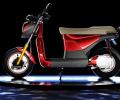
Smaller players manufacturing electric two-wheelers (E2Ws) are unlikely to raise prices of their models initially in 2024 in order to ensure volumes do not drop. The prices of E2Ws range from Rs 90,000 to Rs 1 lakh, the players being Lohia Auto, Godawari Electric, Emobi, etc. As India's E2W sector gears up to go past one million in 2024, manufacturers are likely to maintain price stability, underpinned by strategic independence from subsidies under Faster Adoption and Manufacturing of Electric (and Hybrid) Vehicles II (FAME II), localisation efforts, sustainability initiatives, and a focus on affordability.
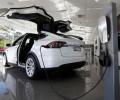
Consumers should be given freedom to make a logical choice, and manufacturers enough leeway so that they can produce what the consumer wants.

Between January and August 2025, over 65,000 units of the Bolero were sold, making it the third-highest contributor to Mahindra's overall SUV sales. Bolero annually achieves sales of over 1 lakh units.

The Camry hybrid sold 466 units in January-April in the region.

Lining up its 2030 strategy, Hyundai said it was targeting up to 30 per cent export contribution and over 1.5-fold rise in revenue, to cross the 1 trillion milestone in five years.
For FY26, the company has adopted a cautious outlook, anticipating domestic growth to broadly track the industry's low single-digit estimated growth amid ongoing economic headwinds.
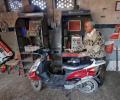
The new scheme may link the incentives to the battery power - higher the power, higher the incentive and most electric two-wheelers running on Indian roads use low power and fast charging batteries.

The company will launch the autos in Hyderabad within three months.

With nearly 100 launches and unveils, the Bharat Mobility Global Expo 2025, held in Delhi from January 17 to 22, made one thing clear to automobile enthusiasts: Electric vehicles (EVs) are the way ahead for the Indian auto market for years to come.

South Korean auto major Hyundai Motor Co president & CEO Jose Munoz on Wednesday said the company's Indian arm will invest Rs 45,000 crore by FY30, aiming to make India its second-largest region globally. Addressing investors here in his first visit to the country, Munoz said Hyundai Motor India Ltd (HMIL) has set a target of up to 30 per cent export contribution.
Auto manufacturers have focused on launching CNG variants of their popular models to meet consumer demand for vehicles with lower running costs.
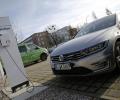
The electric vehicle market in India needs a policy push that goes beyond targets, says Vandana Gombar.
Ola Electric's initial public offering (IPO), of Rs 5,500 crore, is essentially aimed at ensuring the company maintain its top position in the electric two-wheeler segment, with incumbent players TVS and Bajaj Auto giving a fight to the number one player in market share. Most experts and competitors say the amount being raised is in line with the investment required to expand the electric-vehicle (EV) business. There are two discernible trends in the competitive electric two-wheeler market.

Chinese electric carmaker BYD is focusing on launching vehicles in the Rs 25-45 lakh price range in India even as it continues to evaluate customer preferences and demand in more affordable segments, its Head of Electric Passenger Vehicles in India Rajeev Chauhan told Business Standard.

Japanese auto major Honda Cars on Thursday unveiled its new offering for the Indian market -- City e:HEV sedan, marking its foray into the mainstream strong hybrid electric vehicle segment in the country. The company, which is present in India through a wholly-owned subsidiary, has commenced the bookings of the model and plans to introduce it in the market next month. As per the company, the model, an extension of its City model range, would feature self-charging two-motor strong hybrid system connected to a 1.5 litre petrol engine, entailing a peak power of 126 PS and fuel efficiency of 26.5 km per litre.
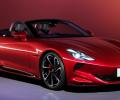
Maruti Suzuki, Tata Motors, Mahindra & Mahindra, Hyundai and MG Motors are gearing up to introduce EVs in India.

'There is a need for a national task force with a singular objective to increase automotive exports.'

By 2025, Uber projects that 25,000-30,000 cars -- or 12 to 16 per cent of vehicle additions -- would be EVs, reports Surajeet Das Gupta.
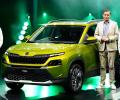
The auto major is not just looking at domestic sales, but also planning to ramp up exports to key markets from here, like the Middle East, North Africa and Australia.
